Turing Complete
Today's xkcd:
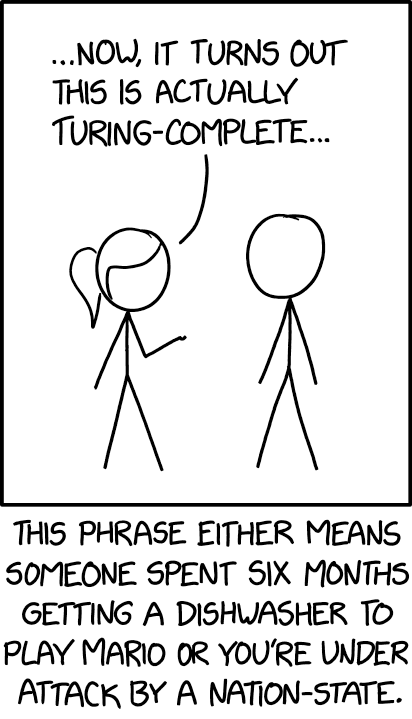
The mouseover title: "Thanks to the ForcedEntry exploit, your company's entire tech stack can now be hosted out of a PDF you texted to someone."
Read the rest of this entry »
Today's xkcd:
The mouseover title: "Thanks to the ForcedEntry exploit, your company's entire tech stack can now be hosted out of a PDF you texted to someone."
Read the rest of this entry »
This NYT link text needed a second reading for me to break the initial prepositional phrase after "Bruce Springsteen", and start the main-clause subject conjunction with "Bob Dylan":
Like Bruce Springsteen, Bob Dylan, Paul Simon, Tina Turner and others have all sold rights to their music for eye-popping prices.
Read the rest of this entry »
I do not recall ever having Russian words of the year featured on Language Log, so it's a delight to have the opportunity to do so now. They were called to my attention by Don Keyser, who spotted this piece in Novaya Gazeta this morning:
Норм и обнуление — Подведены итоги конкурса «Слово года»-2021. Особая конкуренция — в номинации «антиязык»
05:29, 19 декабря 2021 Андрей Архангельский, член экспертного совета «Слово года»
—-
Norm and zeroing
The results of the competition "Word of the Year" -2021 have been summed up. Particular competition – in the category "anti-language"
5:29 am, December 19, 2021
Andrey Arkhangelsky, member of the expert council "Word of the Year"
Don remarked:
Keeping up with the grimly evolving Russian language — neologisms, protoneologisms … the narrative is simultaneously enlightening, droll, and rather sad.
You can get a pretty good rendering via either DeepL or Google Translate. FYI, I've copied below the article the Google Translate rendering. It doesn't do the embedded chart, of course, but the content of the chart is explained in the article.
Read the rest of this entry »
Permalink Comments off
Article in South China Morning Post (12/18/21):
My Hong Kong by Luisa Tam
Cantonese is far from dead. It lags Mandarin in the Chinese language league table for numbers, but its cult status will see it live on
Cantonese is a one-of-a-kind linguistic art form that’s quirkier and more edgy than Mandarin, nimble and ever-changing
Its long-term fate is in the hands of every Cantonese speaker and Cantonese-language enthusiast who is willing to continue to breathe new life into it
In this, her most recent article on the nature and fate of Cantonese, Luisa Tam, a favorite author of ours here at Language Log, is upbeat about the future of the language. I love Cantonese as much as she / anyone does, but I am less sanguine about what lies ahead for it than Luisa is. As I said several days ago during a faculty meeting at Penn, there's no one who is more passionate about about defending and promoting Cantonese than VHM. Why, then, am I so pessimistic about what is in store for this lively language?
Before I answer that question, let's see why Luisa Tam is so positive about Cantonese in the coming years. Here are some selections from her article:
Read the rest of this entry »
Mark Swofford sent in this photograph of a clever, curious sign at an automobile repair shop in Taiwan:
Read the rest of this entry »
Two days ago, I met a person who had a thick white coating on their tongue. Wondering what it was called and its implications for health, I asked members of the e-Mair list about it. Here are some of the answers I received:
Denis (Sinologist):
Thick tongue coating, often due to lengthening of the keratinous papillae on the tongue's surface.
Heidi (Yoga teacher and Ayurveda specialist):
We call it "ama" in Ayurveda – accumulated toxins from undigested foods. The person who has it might be ill. I scrape my tongue every day
From Proto-Indo-Aryan *HaHmás, from Proto-Indo-Iranian *HaHmás, from Proto-Indo-European *h₂eh₃mós (“raw, uncooked”), from *h₂eh₃- (“to burn”). Cognate with Ancient Greek ὠμός (ōmós, “raw, crude, uncooked, undressed”), Old Armenian հում (hum, “raw, uncooked”), Old Irish om (“raw, uncooked”) (whence Irish amh), Persian خام (xâm, “crude, raw”).
(source)
VHM: In some Indic languages it means, among other things, "undigested", as Heidi noted for Ayurveda in general.
Read the rest of this entry »
According to Christina Gleason, "What Does It Mean to Be Fae as a Gender?":
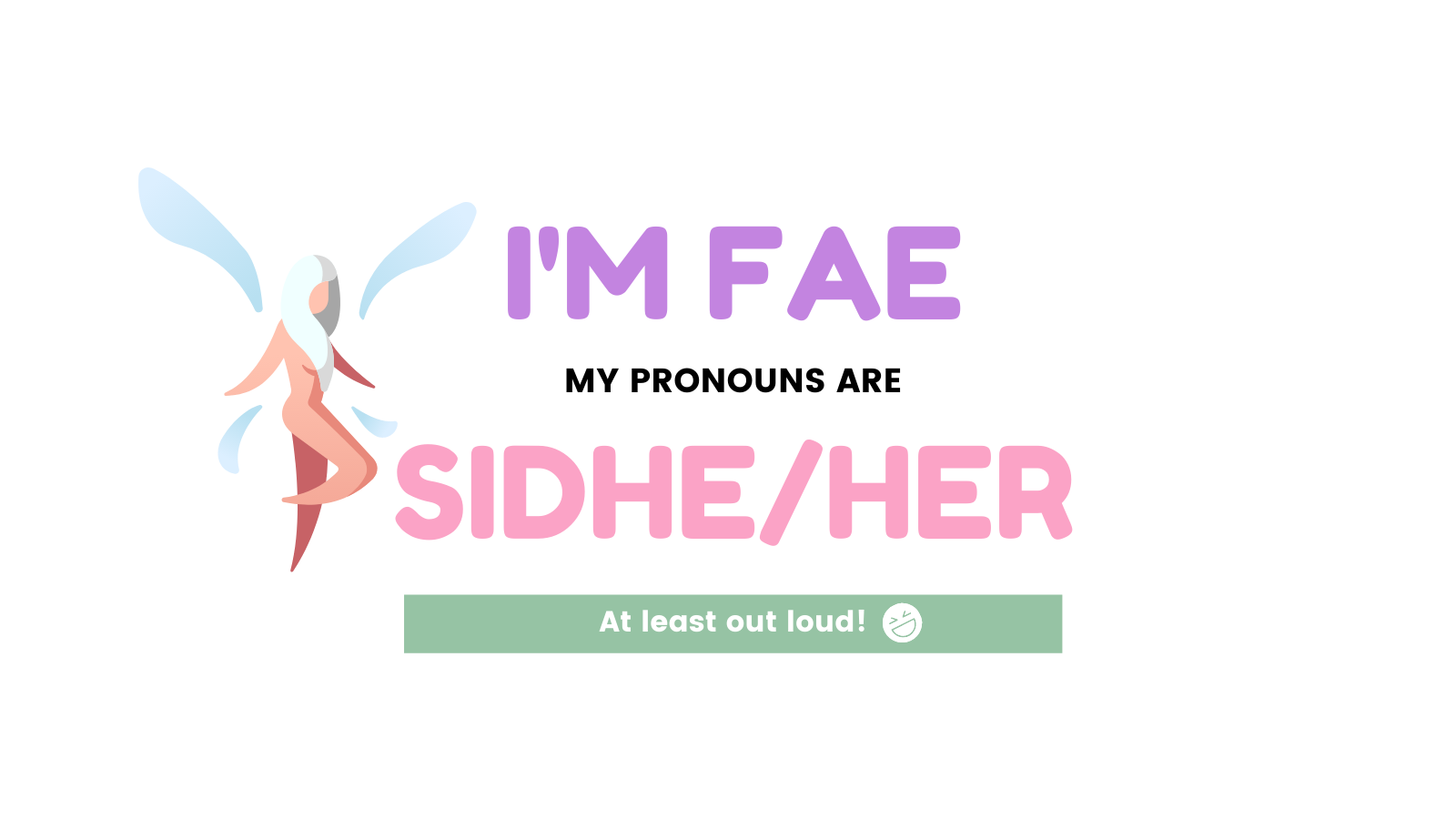 While some people who are fae use fae/faer as their pronouns, I prefer to keep the she/her pronouns I’ve gone by my whole life. It gives me the joke that my pronouns are sidhe/her, where sidhe (pronounced she) is the Irish word for the fairy folk. As genealogy is one of my special interests, I know I have Irish heritage, so I’m not appropriating lore that isn’t a part of my family history.
Read the rest of this entry »
[The first part of this post is from S. Robert Ramsey.]
Ceremony for the unveiling of a bust of the poet on May 18, 2011 in downtown Seoul:
Read the rest of this entry »
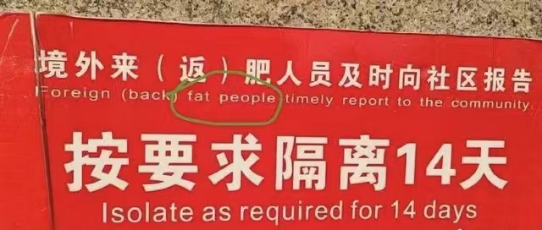
It's been a while since we have posted on this sub-genre of Chinglish:
My parents are touring China and spotted this very thoughtful sign…
byu/yumzau infunny
(reddit)
Read the rest of this entry »