Archive for Diglossia and digraphia
January 25, 2016 @ 9:11 pm· Filed by Victor Mair under Diglossia and digraphia, Writing systems
The subject of digraphia in China often comes up in our discussions about the Chinese writing system on Language Log (always be sure to check the comments on the posts, because much good material is often added in them), e.g.:
"Digraphia and intentional miswriting " (3/12/15)
"Substituting Pinyin for unknown Chinese characters " (12/3/13)
"Creeping Romanization in Chinese " (8/30/12)
"Character amnesia and the emergence of digraphia " (9/25/13)
"Dumpling ingredients and character amnesia " (10/18/14)
"Which is worse? " (1/21/16)
Read the rest of this entry »
Permalink
July 3, 2015 @ 6:07 pm· Filed by Victor Mair under Diglossia and digraphia, Writing systems
S. Robert Ramsey is professor of East Asian linguistics at the University of Maryland and author of the excellent book titled The Languages of China. I often consult with Bob on matters pertaining to Korean and Japanese; he is a reliable source of information on these languages as well as on Chinese in its many varieties — both in their current circumstances and with regard to their historical evolution.
In a recent communication, Bob described a ceremony he attended in Seoul. Since it touches on a subject that we have often discussed on Language Log — digraphia — I thought that I'd share it with colleagues here.
Read the rest of this entry »
Permalink
June 25, 2015 @ 9:47 pm· Filed by Victor Mair under Alphabets, Diglossia and digraphia, Grammar, Punctuation, Writing systems
The current issue of the Dartmouth Alumni Magazine includes an article by Karl Schutz and Jun Bum Sun that made me sit bolt upright:
"The Chosŏn One: The influence of Homer Hulbert, class of 1884, lives on in a country far from his home" (Jul-Aug, 2015).
Read the rest of this entry »
Permalink
June 3, 2015 @ 2:12 pm· Filed by Victor Mair under Bilingualism, Diglossia and digraphia, Writing systems
Photograph of a Chinese ad spotted in a Beijing elevator by David Moser, who also provided much of the analysis that follows:

Read the rest of this entry »
Permalink
March 12, 2015 @ 9:36 am· Filed by Victor Mair under Diglossia and digraphia, Language and advertising, Transcription
I received the following message from David Moser on 6/2/11, but it got lost in my inbox until just now when I was able to retrieve it while cleaning out a bunch of old and unwanted messages:
Wow, talk about digraphia! I just got this text message on my cell phone here in Beijing:
Read the rest of this entry »
Permalink
November 30, 2014 @ 8:15 pm· Filed by Victor Mair under Borrowing, Diglossia and digraphia, Language and advertising
Nathan Hopson sent in this photo (from Nagoya, Japan, but there are similar stores all over Japan):
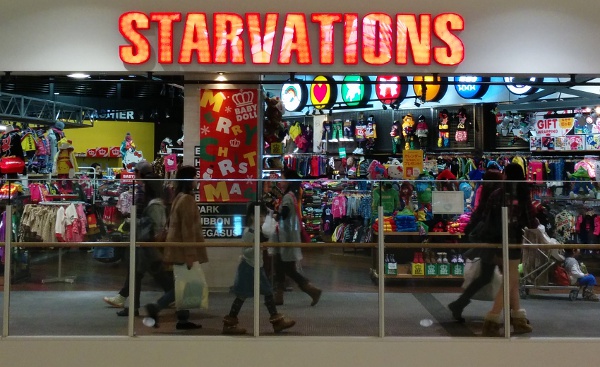
Read the rest of this entry »
Permalink
November 29, 2014 @ 10:35 pm· Filed by Victor Mair under Diglossia and digraphia, Language and politics, Writing systems
Just in case you hadn't seen this in the news, the winner of the Taipei mayoral election held on November 28, 2014 is Ko Wen-je (Kē Wénzhé 柯文哲), a trauma surgeon who ran as an independent.
"Pro-independence party candidate Ko Wen-je claims victory in Taipei mayor race"
The Straits Times (11/29/14)
Read the rest of this entry »
Permalink
November 16, 2014 @ 10:42 pm· Filed by Victor Mair under Diglossia and digraphia, Language and advertising
Something very interesting is going on in this panel (as usual, click to embiggen):

Read the rest of this entry »
Permalink
June 29, 2014 @ 3:20 am· Filed by Victor Mair under Diglossia and digraphia, Language and computers, Language on the internets, Writing
Hindi-Urdu, also referred to as Hindustani, is the classic case of a digraphia, so much so that there has been a long-standing controversy over whether they are one language or two. Their colloquial spoken forms are nearly identical, but when written down, the one in the Devanāgarī script, the other in the Nastaʿlīq script, they have a very different look and "feel".
Read the rest of this entry »
Permalink
June 10, 2014 @ 9:19 pm· Filed by Victor Mair under Dialects, Diglossia and digraphia, Translation
The New Yorker blog has an online article by Elias Muhanna entitled "Translating 'Frozen' Into Arabic". What's noteworthy is that Disney's "Frozen" was translated into Modern Standard Arabic (MSA), while previous Disney releases were translated into Egyptian Arabic. Somewhat oddly, the author compares MSA vis-à-vis colloquial forms of Arabic with both King James Bible English / sportscaster English and Latin quatrains / hiphop French.
Read the rest of this entry »
Permalink
May 20, 2014 @ 3:22 pm· Filed by Victor Mair under Diglossia and digraphia, Language and culture, Lost in translation
Victor Steinbok sent in this photograph of a dim sum restaurant in Boston:

Read the rest of this entry »
Permalink
May 2, 2014 @ 8:31 am· Filed by Victor Mair under Diglossia and digraphia, Writing systems
Over at Lingua Franca, fellow Language Log author Geoffrey Pullum has an excellent article entitled "There Was No Committee".
Here's a key paragraph:
Some people talk as if Mandarin Chinese was gaining on English. It is not, and it never will. A Tamil-speaking computer scientist explaining an algorithm to a Hungarian scientist at a Japanese-organized scientific meeting in Thailand calls on English, not Chinese. Nowhere in the world do we find significant numbers of non-Chinese speakers choosing Mandarin as the medium for bridging language gaps. There are no signs of that changing.
Read the rest of this entry »
Permalink
February 9, 2014 @ 7:49 pm· Filed by Victor Mair under Diglossia and digraphia, Topolects
Bruce Rusk, in a comment to "A bilingual, biscriptal product designation in Taiwan", mentioned "the informal Taiwanese Mandarin pronunciation of 給 ('give') gei3 as gie (3rd tone?), which is not a 'legal' Mandarin syllable" and noted that he "always assumed it was influenced by Taiwanese."
Bruce's mention of "給 ('give') gei3" in turn reminds me of a related Taiwanese-Mandarin interference that affected my own speech in a profound way.
Read the rest of this entry »
Permalink
