Pandemic art

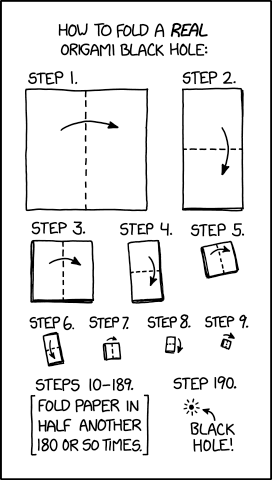
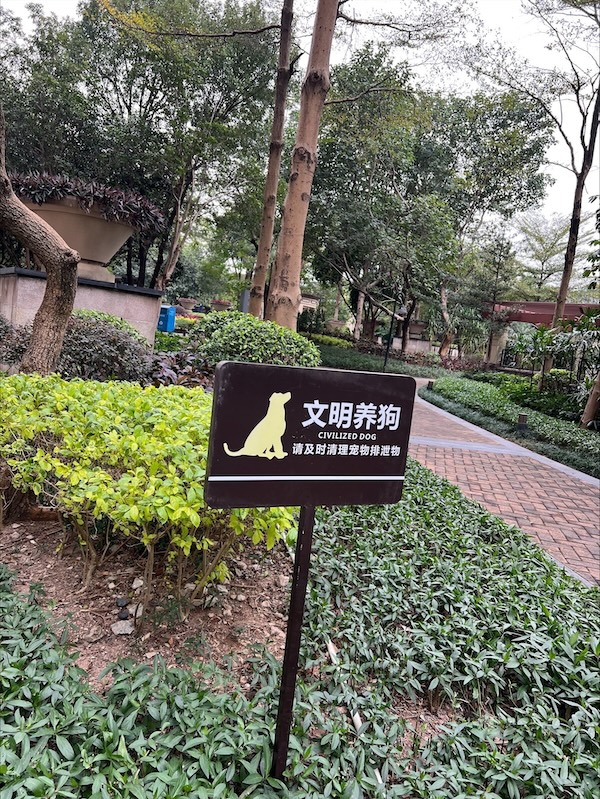
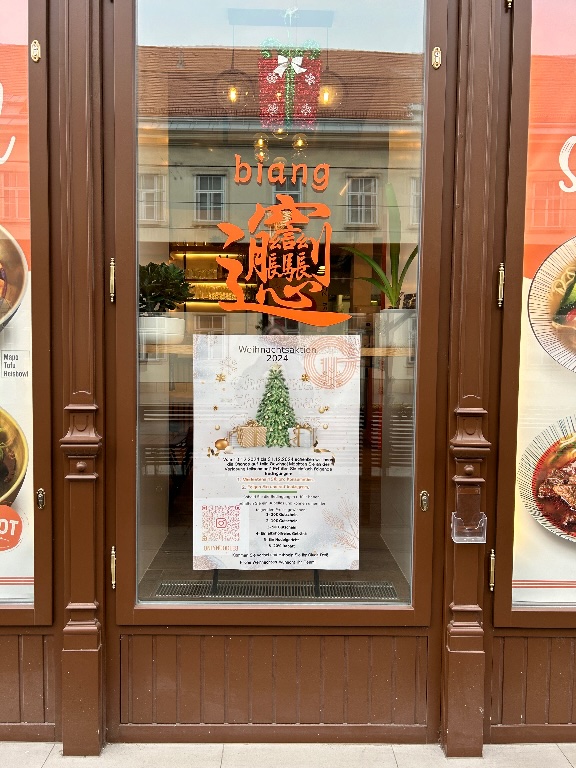
One image evokes the other:


Read the rest of this entry »

Comments (11)


BiH

I've been familiar with the country name "Bosnia and Herzegovina" for quite some time, but until this morning I've never seen it referred to as BiH.  I came upon this usage in news reports about the delivery of PRC medical supplies to that country, e.g., here.  Although the Chinese printing on the boxes in the background of the photograph in this report is small and blurred, we can verify from other sources (e.g., here) what it says:

wànlǐ shàng wéi lín, xiāngzhù wú yuǎnjìn 万里尚为邻,相助无远近 ("ten thousand miles but still neighbors, mutual assistance has no far or near")

Other recent uses may be found here and here.

Can anybody transcribe and translate the printing in Roman letters (Bosnian? Croatian?) that is also on the boxes?

Read the rest of this entry »

Comments (24)


French girl sells crêpes in a Taiwan market

Scene at a Taichung night market:

Read the rest of this entry »

Comments (60)


Roll out of here like an egg, Xi

Tweet from Heitor@Heitormde:

The 0:36 video was taken just outside the gate of the Chinese embassy in Brasilia.

Read the rest of this entry »

Comments (7)


"One I first saw": more on homophonically induced typing errors

A little over a week ago, I described how I mistyped "stalk" for "stock".  That led to a vigorous discussion of precisely how people pronounce "stalk".  (As a matter of fact, in my own idiolect I do pronounce "stock" and "stalk" identically.)  See:

"Take stalk of: thoughts on philology and Sinology" (3/29/20)

I just now typed "One I first saw…" when I meant "When I first saw…".

Read the rest of this entry »

Comments (46)


Stay uninflected!

Students, former students, colleagues, and friends all around the world have been sending me best wishes during this age of the COVID-19 pandemic. Their impression is that things in America now are particularly bad. They offer me face masks and other PPE, they worry about my health, they give me all sorts of advice.

I just received my favorite piece of encouragement thus far from a student who is stuck in Beijing:

"Stay uninflected!"

Read the rest of this entry »

Comments (15)


New approaches to Alzheimer's Disease

This post is another pitch for our on-going effort to develop simple, easy, and effective ways to track neurocognitive health through short interactions with a web app.  Why do we want this? Two reasons: first, early detection of neurodegenerative disorders through near-universal tracking; and second, easy large-scale evaluation of interventions, whether those are drugs or lifestyle changes. You can participate by enrolling at https://speechbiomarkers.org, and suggesting it to your friends and acquaintances as well.

Today, diagnosis generally depends on scoring below a certain value on cognitive tests such as the MMSE, which usually won't even be given until you've started experiencing life-changing symptoms — and at that point, the degenerative process has probably been at work for a decade or more. This may well be too late for interventions to make a difference, which may help explain the failure of dozens of Alzheimer's disease drug trials. And it's difficult and expensive to evaluate an intervention, in part because it requires a series of clinic visits, making it hard to fund support for trials that don't involve a patented drug.

If people could accurately track their neurocognitive health with a few minutes a week on a web app, they could be alerted to potential problems by the rate of change in their scores, even if they're many years away from a diagnosis by today's methods. Of course, this will be genuinely useful only when we have ways to slow or reverse the process — but the same approach can be used to evaluate such interventions inexpensively on a large scale.

More background is here: "Towards tracking neurocognitive health", 3/24/2020. As that post explains, this is just the first step on what may be a long journey — but we will be making the data available to all interested researchers, so that the approaches that have worked elsewhere in AI research over the past 30 years can be be applied to this problem as well.

Again, you can participate by enrolling at https://speechbiomarkers.org . And please spread the word!

Read the rest of this entry »

Comments (2)


Language for COVID-19: German and Finnish

A rare find of linguistic news in a blog concerning the Supreme Court:

"Relist Watch: Kalsarikännit edition", John Elwood, SCOTUSblog

SCOTUSblog is about the work of the Supreme Court of the United States.  The author must have a streak of the linguist in him, for he chose to  begin today's post with three paragraphs about language usage related to the coronavirus crisis.  Here they are:

As America begins its fourth week under quarantine with widespread working from home, we’ve begun noticing shifts in grooming, attire and behavior as many of us remain cooped up for weeks on end.

Read the rest of this entry »

Comments (10)


Trollery

In previous posts on this subject (see "Readings" below), we have listed a number of traits of the typical troll.  There are a few more items that have not been explicitly covered, so I will mention them here.

First, though, a prefatory remark about the defining nature of a troll and what his / her modus operandi consists of.  Namely, the primary purpose of a troll is to disrupt the smooth, collaborative functioning of a discussion group that is dedicated to the discovery of ideas and free, fruitful, civil exchange of opinions.  Trolls want to inflame others so as to bring a screeching halt to amicable, productive dialogue and discourse.  Sometimes trolls will come perilously close to derailing an interesting discussion, causing a furor of denunciation and recrimination, but then, if the group is fortunate and things calm down, they will end up having a stimulating, enlightening conversation after all.

A conspicuous characteristic of the typical troll is that either they do not read the comments policy of the forums where they deposit their invective or they read the guidelines but choose not to adhere to them.  Our comments policy may be accessed by clicking on the link at the top right of the Language Log (LLog) homepage.  However, since many commenters consistently break these rules, I think it is fitting to list them here for all LLog readers to see:

Read the rest of this entry »

Comments (21)


Cantonese: good news and bad news

The good news is that it's a language.

The bad news is that you can't speak it.

"China’s version of TikTok suspends users for speaking Cantonese:  ByteDance’s short video app Douyin has been urging live streamers to switch to the country’s official language", Abacus via SCMP (4/3/20)

I've been hearing similar reports concerning the use of Cantonese on other social media:  it is definitely discouraged or even forbidden.  At least, though, the Abacus article does not miscall Cantonese a dialect, but affords it the dignity of referring to it as a language.

Read the rest of this entry »

Comments (31)


Minecraft Penn

A month ago ("Real people in virtual worlds: a viral update?", 3/5/2020), I noted that

[T]he popular virtual-meeting applications don't yet have a way for a group to hold their discussion in a shared virtual space, as in current video games or applications like vrchat.

And when participants' avatars (realistic or otherwise) can sit or move in a shared space, with appropriate directional audio and so on, we'll be able to have virtual seminars, virtual workshops, virtual corridor conversations — and most important, virtual dinner parties!

One positive outcome of the growing panic over COVID-19 will be to hasten the deployment of these technologies.

So today I learned that some University off Pennsylvania students are creating a virtual Penn campus, with the idea of holding (a version of) events there like Hey Day and the Penn Relays — "UPenn students recreated their campus on 'Minecraft' in painstaking detail while stuck at home — take a look", Business Insider 4/5/2020.

Read the rest of this entry »

Comments (3)


Alphabetical transcriptions in Cantonese

[This is a guest post by Till Kraemer]

I live in Hong Kong, and many things are fascinating here, especially the way they use English characters in Cantonese. Some very frequently used words (including tones and everything) don't have Chinese characters at all, like "hea" and "chur". Obviously it's colloquial, but this interesting Chinese/English mix goes as far as official names of movies:

(image source)

Read the rest of this entry »

Comments (7)


Ancient Chinese mottos

From Diana Shuheng Zhang:

Jūnzǐ yǒu jiǔ dé 君子有九德:A lordling has nine essential properties:

kuān ér lì 寬而栗,tolerant but tough,
róu ér lì 柔而立,flexible but upright,
yuàn ér gōng, 願而恭,ambitious but humble,
luàn ér jìng 亂而敬,rebellious but respectful,
rǎo ér yì 擾而毅,adaptive but resolute,
zhí ér wēn 直而溫,candid but considerate;
jiǎn ér lián 簡而廉,simple and incorruptible,
gāng ér 剛而塞,unbending and honest,
qiáng ér yì 強而義。strong and principled.

—— from the chapter of the Book of Documents, "Gaoyao's Strategy" 《尚書·皋陶謨》 (the chapter was composed ca. 700 BCE, according to Early Chinese Texts (1993), Michael Loewe, ed., 376-389 [by Edward L. Shaughnessy])

Read the rest of this entry »

Comments (10)