We've been discussing simplified characters, both official and unofficial (believe you me, they're all out there). They come and go as people find them useful or not. This is one thing that makes characters very different from alphabets and syllabaries. The latter two types of writing systems tend to settle down to a more or less fixed number of elements / letters / symbols (generally around 50-100 symbols for a syllabary and 20-40 or so for an alphabet, whereas morphosyllabographic / logographic writing systems tend to keep burgeoning out of control if they are a living, functioning script.
It has often been mentioned on Language Log that the simplification of Chinese characters by the PRC government did not come at one fell swoop in 1965, but was spread out over a long period of time, and had at least one additional formal stage, in 1977, that was retracted in 1986.
This has resulted in uneven acquisition of separate sets of simplified characters by students who went through primary and secondary education at different times.
There's been a lot of hoopla about the famous Chinese author Lin Yutang's (1895-1976) purported MingKwai ("clear-quick") typewriter in the last few years. Fortunately, linguist Julesy popped the hallucinatory bubble about the proclaimed wonders of the MingKwai by grappling with the historical, theoretical, and practical aspects of the MingKwai: "The many myths about the Chinese typewriter" (9/7/25).
Now, in a new video that I just learned about two days ago, we get inside a replica of the MingKwai and can see how incredibly complex its innards are:
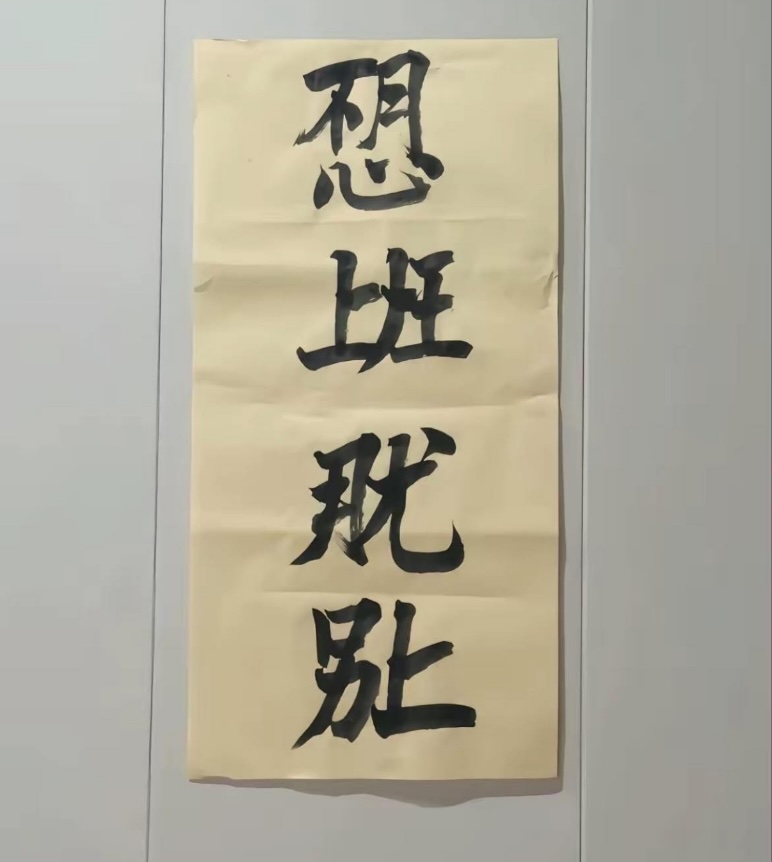
People who don't know any Chinese characters will think the four glyphs pictured above are just typical Chinese characters, but won't be able to make any sense of them at all.
People who are minimally / partially literate in Chinese characters will recognize components of the four glyphs, but not one of the glyphs as a whole.
People who are moderately literate in Chinese characters will "sort of" recognize parts of the four glyphs, but will not be able to extract meaning from the sentence as a whole.
'Tis the season of sneezing, and I'm doing a lot of it these days. At 5 AM this morning, I was awakened by my own sneezing. It was completely unpremeditated and unexpected. The sounds that came out were aaah-HOOOOO!!!!! Low level / high rising.
The conventional representation of this sound in writing is "achoo". Other variations include "kerchoo" and "hachao", etc. In German, I think that the sound of a sneeze is represented as "hatschee" and in Japanese it is "hakushon".
This morning, the sound that I explosively emitted was aaah-HOOOOO!!!!! Twice.
Since I have a large, Alpine schnoz that acts as an echo chamber, causing the sound to reverberate in my nasal passages, it is extremely loud and ends shrilly. It can be heard a block away, or all the way down the turn of the corridor from my office to the departmental office about 40 paces distant.
During the last thirty to forty years, two of the most popular dictionaries for mastering sinographs were those of James Heisig and Rick Harbaugh. I was dubious about the efficacy of both and wished that my students wouldn't use them, but language learners flocked to these extremely popular dictionaries, thinking that they offered a magic trick for remembering the characters.
The latter relied on fallacious etymological "trees" and was written by an economist, and the former was based on brute memorization enhanced by magician's tricks and was written by a philosopher of religion. Both placed characters on a pedestal of visuality / iconicity without integrating them with spoken language.
I have already done a mini-review of Harbaugh's Chinese Characters and Culture: A Genealogy and Dictionary (New Haven: Yale Far Eastern Publications, 1998) on pp. 25-26 here: Reviews XI, Sino-Platonic Papers, 145 (August, 2004). The remainder of this post will consist of extracts of Giancotti's essay and the view of a distinguished Japanologist-linguist on Heisig's lexicographical methods.
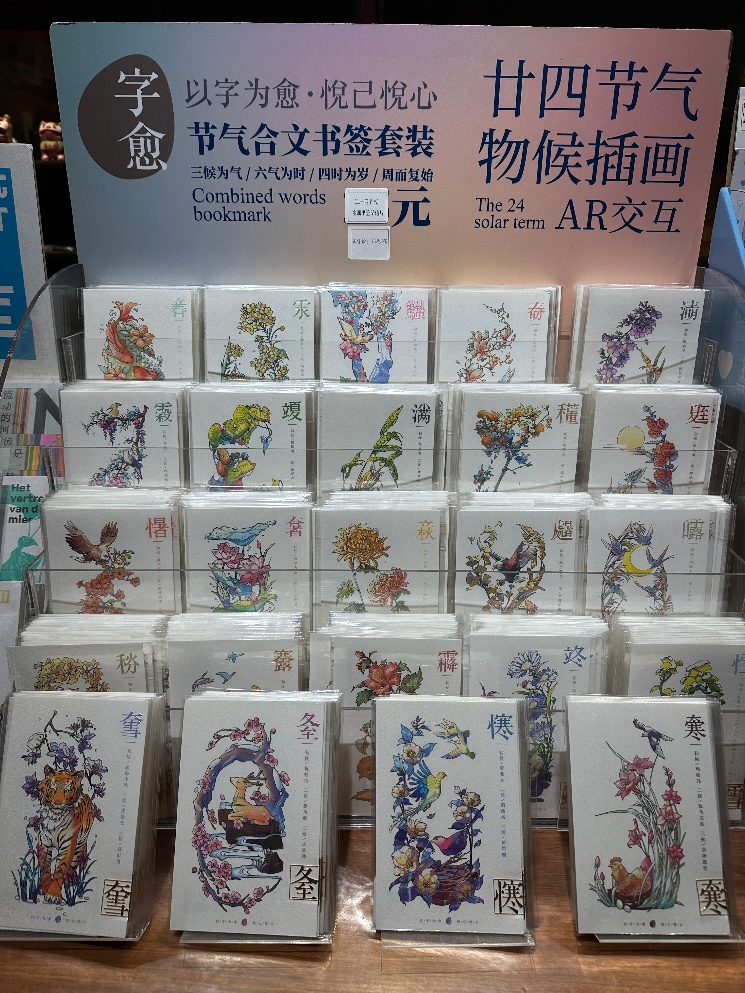
During my visit to the Luoyang Museum 洛阳博物馆, I found something amazing in its museum store. It is a set of 24 postcards, corresponding to the 24 solar terms 节气 (jieqi) in the traditional Chinese lunar calendar for agricultural purposes. What’s special about this set of cards is the design: every disyllabic lexeme for a solar term is coined into one single Sinitic “character”. I intended to attached multiple photos as examples but the last email was not successfully sent — the “size” was too big as an email. Therefore, here I’m only attaching one photo, that depicts the whole scene of the set of 24 cards. By clicking on the photograph, you will be able to enlarge it sufficiently to enable you to see the details of the artwork and the writing.
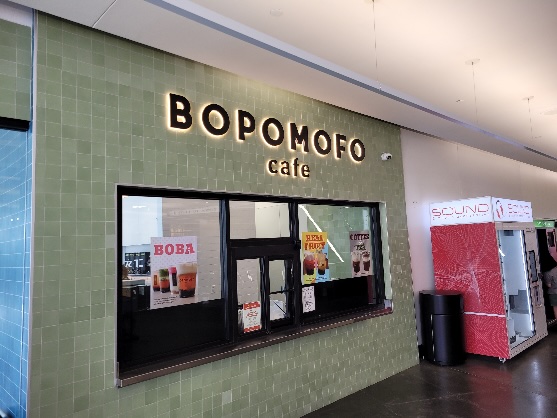
BOPOMOFO CAFE draws its name from the phonetic Traditional Chinese Alphabets. ㄅ, ㄆ, ㄇ, and ㄈ [bo, po, mo, and fo] are the “ABCs” of the Mandarin Chinese alphabet symbolizing nostalgia and strength as the building blocks of Mandarin language mastery. Co-founders Eric and Philip, both "American Born Chinese" (ABC), chose the name to reflect their heritage and shared pride in their culture.