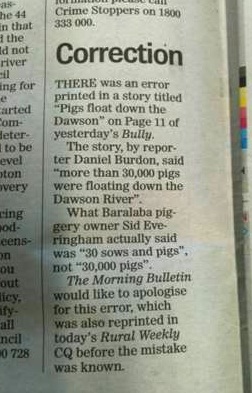
Jökull of the year
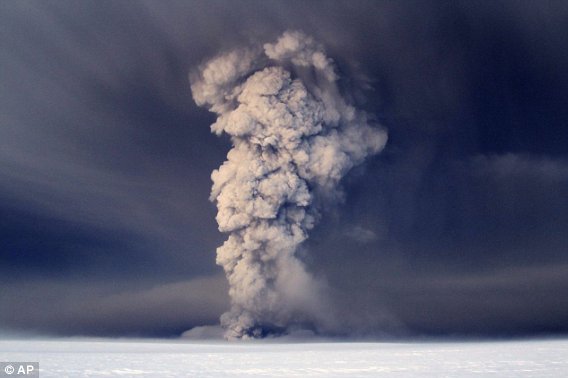 Another volcano in Iceland is erupting. But the projected effect on air travel is less serious than the disruptions caused by last year's Icelandic eruption:
University of Iceland geophysicist Magnus Tumi Gudmundsson said this eruption, which began Saturday, was Grimsvotn's largest eruption for 100 years.
"(It was) much bigger and more intensive than Eyjafjallajokull," the volcano whose April 2010 eruption shut down airspace across Europe for five days, he said.
"There is a very large area in southeast Iceland where there is almost total darkness and heavy fall of ash," he said. "But it is not spreading nearly as much. The winds are not as strong as they were in Eyjafjallajokull."
He said this ash is coarser than last year's eruption, falling to the ground more quickly instead of floating vast distances.
The projected disruption of newsreader self-confidence is also less serious this time, since the names involved are shorter and less confusing to non-Icelanders — the glacier that the vocano is erupting through, for example, is Vatnajökull rather than Eyjafjallajökull.
Read the rest of this entry »

 In this week's online BBC News magazine, Alan Metcalf