Archive for Language and the media

Obama's Imperial 'I': spreading the meme

I guess it's now officially a Media Meme: Obama's "royal we has flowered into the naked 'I'". First Terence Jeffrey ("I, Barack Obama"), then George Will ("Have We Got a Deal for You"), now Stanley Fish ("Yes I can"):

By the time of the address to the Congress on Feb. 24, the royal we has flowered into the naked “I”: “As soon as I took office, I asked this Congress.” “I called for action.” “I pushed for quick action.” “I have told each of my cabinet.” “I’ve appointed a proven and aggressive inspector general.” “I refuse to let that happen.” “I will not spend a single penny.” “I reject the view that says our problems will simply take care of themselves.” “I held a fiscal summit where I pledged to cut the deficit in half by the end of my first term.” That last is particularly telling: it says, there’s going to be a second term, I’m already moving fast, and if you don’t want to be left in the dust, you’d better fall in line.

There’s no mistaking what’s going on in the speech delivered last week. No preliminary niceties; just a rehearsal of Obama’s actions and expectations. Eight “I”’s right off the bat: “Just over two months ago I spoke with you… and I laid out what needed to be done.” “From the beginning I made it clear that I would not put any more tax dollars on the line.” “I refused to let those companies become permanent wards of the state.” “I refused to kick the can down the road. But I also recognized the importance of a viable auto industry.” “I decided then…” (He is really the decider.)

The trouble with this idea, as often with the insights of the punditocracy, is that there's no evidence that it's true. Worse, evidence is easily available to disconfirm it.

Read the rest of this entry »
Comments (25)

Fact-checking George F. Will

The opening sentence of George F. Will's latest column ("Have We Got a Deal for You", 6/7/2009):

"I," said the president, who is inordinately fond of the first-person singular pronoun, "want to disabuse people of this notion that somehow we enjoy meddling in the private sector."

This echoes J.B.S. Haldane's quip that the creator, if he exists, must be inordinately fond of beetles; and Will, like Haldane, is presumably proposing an inference about someone's preferences from his actions, not reporting a direct emotional revelation.

So, since I'm one of those narrow-minded fundamentalists who believe that statements can be true or false, and that we should care about the difference, I decided to check. (On Will, not Haldane.)

Read the rest of this entry »

Comments (38)

Mice with the "language gene" stay mum

Now they've done it — spliced human FOXP2, often called the "language gene", into some mice in Leipzig.  This won't give the mice anything new to say, but many people were certainly expecting them to start producing and analyzing more complex sound patterns.  Thus Juan Uriagereka ("The Evolution of Language", Seed Magazine, 9/25/2007):

Chimps, and our other close relatives the apes, certainly have the hardware for some basic forms of meaning […]. What they don’t have is a way to externalize their thoughts. I’d wager that chimps just lack the parser that FoxP2 regulates.

Uriagereka suggested that "Because of the similarities in brain structure and in the syntax of their song, finches must also have this parser", created by the songbird version of Foxp2. If this bold conjecture were true — that certain alleles of this particular gene create a "parser" in the brain — then the mice recently gifted with a "humanized" form of foxp2 should exhibit some striking abilities, such as recursively-structured squeaks.

Read the rest of this entry »

Comments (14)

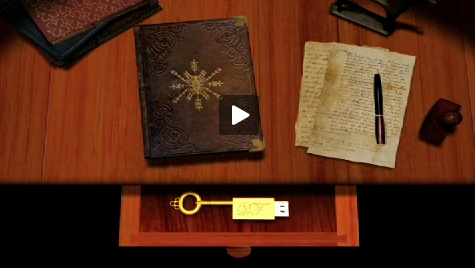
Dongle

The OED glosses dongle as "A software protection device which must be plugged into a computer to enable the protected software to be used on it", and gives the earliest citation as

1982 MicroComputer Printout Jan. 19/2 The word ‘dongle’ has been appearing in many articles with reference to security systems for computer software [refers to alleged coinage in 1980].

(The etymology is given as [Arbitrary], which seems a bit harsh.)

But Suzanne Kemmer recently observed in an email to me that "people are using  "dongle" to mean anything that can plug into a USB port, and since for most users that is a flash drive, 'dongle' can now be used for a garden-variety flash drive".

Read the rest of this entry »

Comments (54)

Glenn Wilson falls off the wagon?

According to Vaughn at Mind Hacks ("The demon drink", 5/29/2009):

Oh dear. It looks like psychologist Glenn Wilson has fallen off the wagon again. From the man who brought you the 'email hurts IQ more than cannabis' PR stunt before repenting, comes the 'the way you hold your drink reveals personality' PR stunt.

This time it's to promote a British pub chain and God bless those drink sodden journos who have gone and given it pride of place in the science section of today's papers.

Read the rest of this entry »

Comments (18)

Women's happiness and pundits' accuracy

Following up on yesterday's discussion of Ross Douthat's column on women's liberation and women's unhappiness, I thought that some people might find useful to look at the underlying data in a more quantitative way. So I downloaded the whole General Social Survey dataset from here, and pulled out the columns corresponding to the variables "year", "sex", and "happy": some  summaries are below, and if you want to do your own analysis of this subset of the data, a .csv file is here.

Read the rest of this entry »

Comments (15)

The happiness gap is back

According to Ross Douthat's latest column for the NYT, "Liberated and Unhappy", 5/25/2009:

[A]ll the achievements of the feminist era may have delivered women to greater unhappiness. In the 1960s, when Betty Friedan diagnosed her fellow wives and daughters as the victims of “the problem with no name,” American women reported themselves happier, on average, than did men. Today, that gender gap has reversed. Male happiness has inched up, and female happiness has dropped. In postfeminist America, men are happier than women. [emphasis added]

Read the rest of this entry »

Comments (40)

Absolute pitch: race, language, and culture

A couple of days ago, Geoff Pullum illustrated "The science news cycle" by citing an article that told us "You can develop musical skill comparable to Hendrix and Sinatra — if you learn an East Asian language."  Geoff might have cited some other articles exhibiting a depressingly wide range of other misunderstandings of the same research, like "Find Out If You're Tone Deaf; Plus, Are Asians Naturally Better Musicians"; "The key to perfect pitch lies in tonal languages"; "Chinese languages make you more musical: Study"; etc.

The basis of the news reports was a paper presented at the Acoustical Society of America's 157th Meeting: Diana Deutsch, Kevin Dooley, Trevor Henthorn, and Brian Head, "Absolute pitch among students in an American music conservatory: Association with tone language fluency", Paper 4aMU1, presented on Thursday Morning, May 21, 2009.

The link just presented was to the 200-word abstract in the (now online) conference handbook.  The source of the media connection was probably the "lay language version" also offered on the conference web site: "Perfect Pitch: Language Wins Out Over Genetics".  The route of the media connection was (I believe) via a story by Hazel Muir in the New Scientist, "Tonal languages are the key to perfect pitch", April 6, 2009, along with a press release by Inga Kiderra in the UCSD publication relations office ("Tone language is key to perfect pitch, 5/19/2009).

The provisioning of "Lay Language Papers" is part of the Acoustical Society of America's effort to reach out to the media (the online "press room" is here). I'm a member of the ASA, and I applaud this effort.  One obvious benefit is that the "lay language papers" are written by the researchers themselves, not by PR people. More scientific societies should do this kind of thing.

But I'd like to draw your attention to a couple of points that were left out of yesterday's discussion.

Read the rest of this entry »

Comments (33)

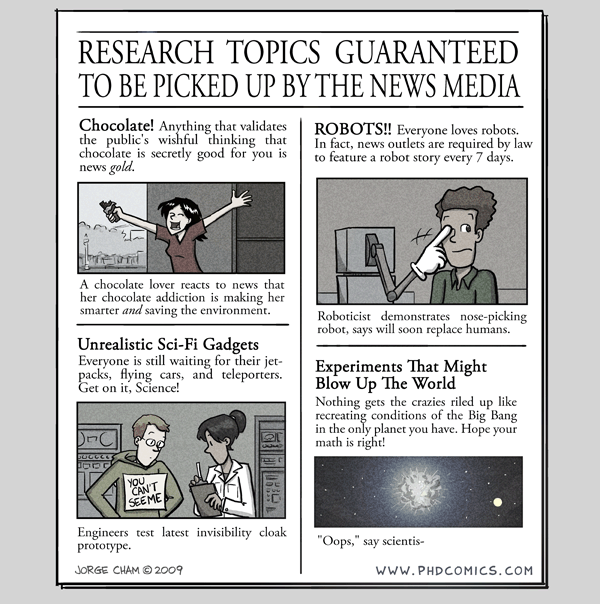
MSM science bait

Jorge Cham at PhD Comics follows up on his analysis of the science news cycle:


Read the rest of this entry »

Comments (19)

The science news cycle: today's example

You might think the cartoon about the science news cycle that Mark Liberman recently reproduced here is exaggerating the silliness of newspaper reports of scientific findings. It isn't. Take a look at today's example, from the psychology of language and music. Diana Deutsch of the University of California, San Diego, has recently shown that possession of perfect musical pitch (ability to state the pitch of an isolated note without having first heard a reference note) correlates with two environmental factors: (i) having early musical training, and (ii) being a fluent speaker of a tone language such as Mandarin Chinese. Now here is the opening sentence of what the Metro (a free paper in the UK) made of it this morning:

You can develop musical skill comparable to Hendrix and Sinatra — if you learn an East Asian language.

I swear I'm not making this up: take Chinese lessons and you can be like Jimi Hendrix, that's their take. (They then go on to say that tone language speakers are more likely to have perfect pitch, as if that were an expansion of the content of the first sentence, that's about it, except for crediting Deutsch as belonging to the nonexistent "California University".) It barely needs the commentary that I've decided I'm not going to give, does it? When Language Log tells you that science reports touching on language are often so stupid that it boggles the mind, don't imagine that we're exaggerating.

Read the rest of this entry »

Comments (49)

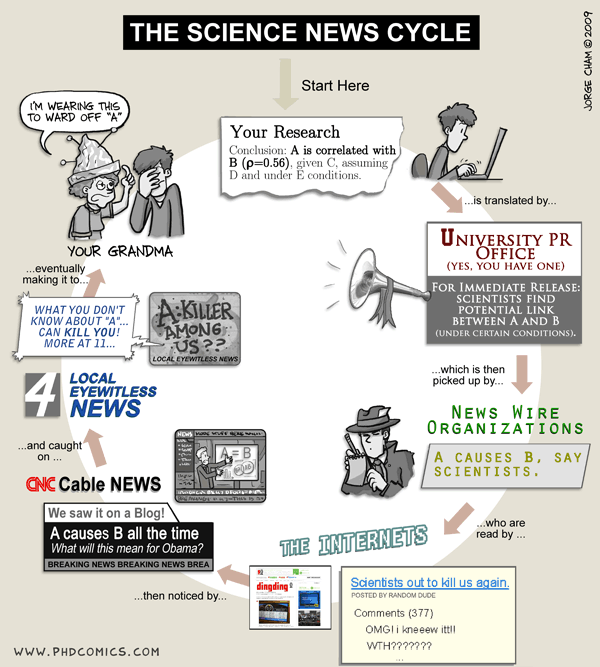
The Science News Cycle

According to Jorge Cham at PhD Comics (click on the image for a larger version):

Read the rest of this entry »

Comments (21)

Matrix verbs as "ghostly adverbials"?

Last week, fev at Headsup: The Blog featured an unusual referential tangle ("March of the pronouns", 4/24/2009):

A 30-year-old Pontiac man is in the Oakland County Jail and facing felony charges after authorities said he rammed a man’s car after finding his wife in the backseat with him.

Read the rest of this entry »

Comments (35)

Forbes on neologisms, and the return of the million-word bait-and-switch

Forbes.com is running a special report on neologisms — a rather peculiar topic for Forbes, I suppose, but they put together a pretty decent lineup of contributors. From the Language Log family there's John McWhorter and me, with good friends of LL Grant Barrett and Mark Peters also pitching in. There really was no news hook for the report, unless you count the claim by Global Language Monitor that English will be adding its millionth word on April 29, 2009. No, make that June 8. Scratch that, June 10.

Read the rest of this entry »

Comments (8)