Canton
« previous post |
Since Victor recently spent 1100 words on various people's "best approximations of how they think they are saying 'Canton'", "expressed in common spelling (not a phonetic alphabet)", and has resisted requests to provide audio, I thought I'd provide some examples of how a Canton resident pronounces the city's name. As I've explained many times, I don't think that IPA transcriptions are an effective way of representing how people actually talk, and this case will continue to support that view. Instead, a good place to start is a sample of audio clips along with graphical representations of waveforms, spectrograms and other kinds of acoustic analysis — and there are several possible directions to go from there.
I used the YouTube video "Living in Canton Ohio", which starts this way:
Are you wondering more about what Canton Ohio is all about?
Zeroing in on Canton:
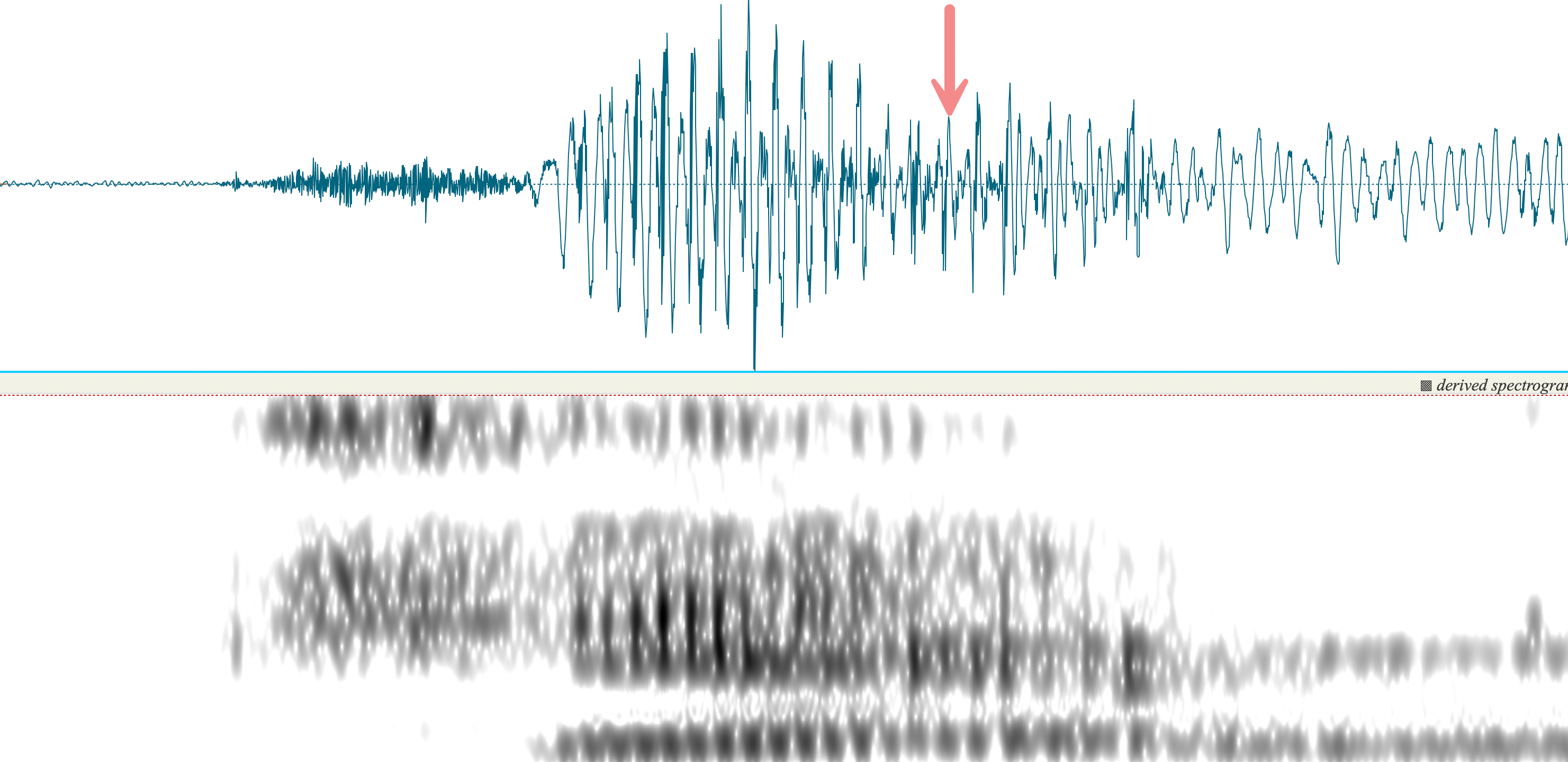
The residue of the /t/ is a glottalized region (marked with the red arrow) about 80 milliseconds into the nasalized (and raised) /ae/ vowel, leading into the second syllable which has a brief [ɪ]-like region followed by 80 milliseconds of nasal murmur.
Playing the first and second syllables separately makes what's happening a bit clearer:
The next Canton in that video:
Everything you can imagine I'm gonna try to go over it for you
and give you a truer idea of what Canton is all about
Zeroing in again, we see the same thing as before:
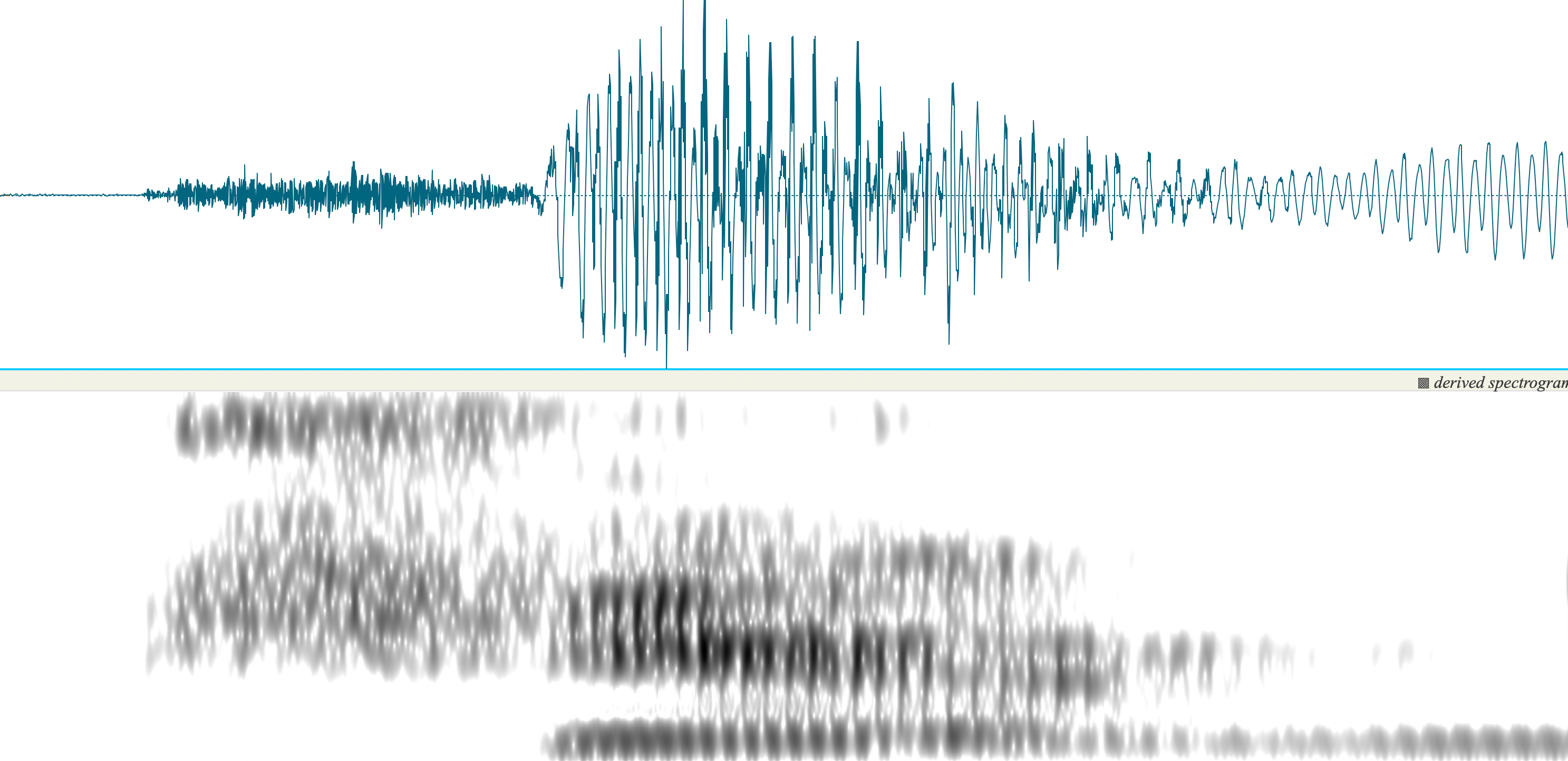
Is the third time the charm?:
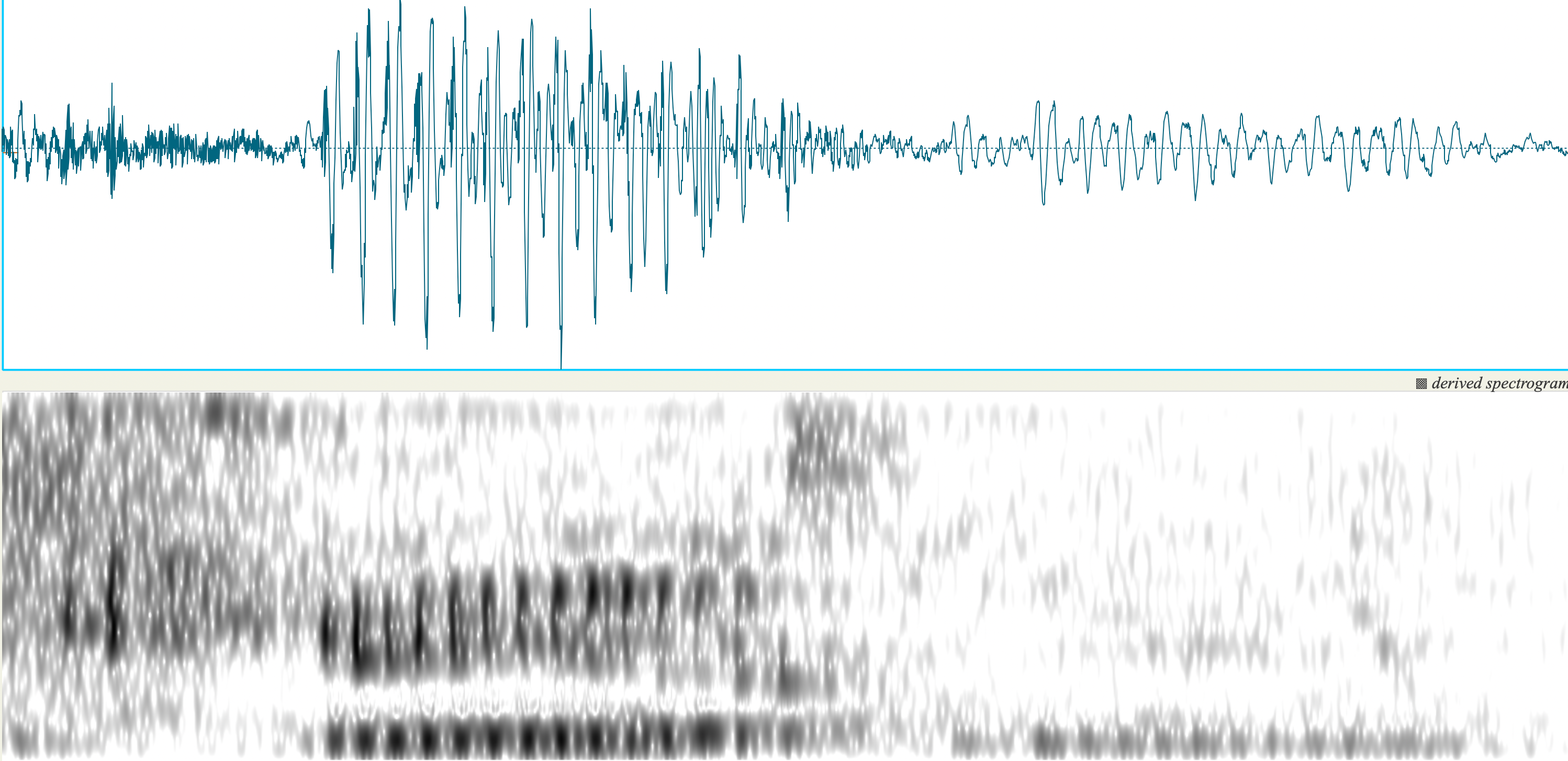
First up is what I'm onna talk about is when it comes to living in Canton
It sounds similar to the first two. But zeroing in, we see what looks more like a glottal fricative followed by a syllabic nasal (though again, an IPA transcription wouldn't really tell us what's happening):
There are more Cantons in the rest of that video, and we'd need to look at more of them to get a better sense of the full range of this guy's pronunciations. Victor's informants may well have even more variation — but I don't think that it's very helpful to learn how people try to apply their intuitions about standard English orthography to describe how they talk, unless we also have some recordings to illustrate what they're describing.
J.W. Brewer said,
November 18, 2025 @ 10:31 am
One limitation of IPA notation is that there can be considerable variation in realizations of a vowel (for example) represented by a single glyph such as /æ/. To my non-expert ear this speaker seems to exhibit what wikipedia describes as "raising and gliding of pre-nasal /æ/ (with man having a higher and tenser vowel sound than map)" but to a more pronounced extent than the average American speaker – a feature I think of as "Midwestern" for a sort of Chicago-centric view of the Midwest but here it is approx. 380 miles (by road, not as the crow flies) east of Chicago. Do these visualizations confirm (or disconfirm) that description of what's going on in the first-syllable verb?
Jarek Weckwerth said,
November 18, 2025 @ 11:36 am
@ Mark Liberman Thank you, that's what we needed.
@ J W Brewer variation in realizations of a vowel (for example) represented by a single glyph such as /æ/ — You present this as a phonemic transcription between slashes, so variation is exactly what you'd expect. An actual phonetic transcription could be more detailed, but of course Mark is right in principle about the impossibility of showing speech "truthfully" using a segmental notation.
Jonathan Silk said,
November 18, 2025 @ 12:56 pm
I find it interesting that his “about” sounds almost Canadian to me