World-wide welcome?
« previous post | next post »
A couple of decades ago, I reviewed the argument between Paul Ekman and Margaret Mead about whether facial expressions are universal or socially constructed:
"Political correctness, biology and culture", 10/31/2006
"The Cabinet of Dr. Birdwhistell", 11/2/2006
Ekman won that argument, at least as judged by most of subsequent intellectual history — though not everyone is convinced, and his own methods have been criticized.
But I recently saw a facial image suggesting that postural context also matters, with perhaps some effects of social associations as well.
We associate the Statue of Liberty with a positive, welcoming attitude — "From her beacon-hand / Glows world-wide welcome", as Emma Lazarus wrote.
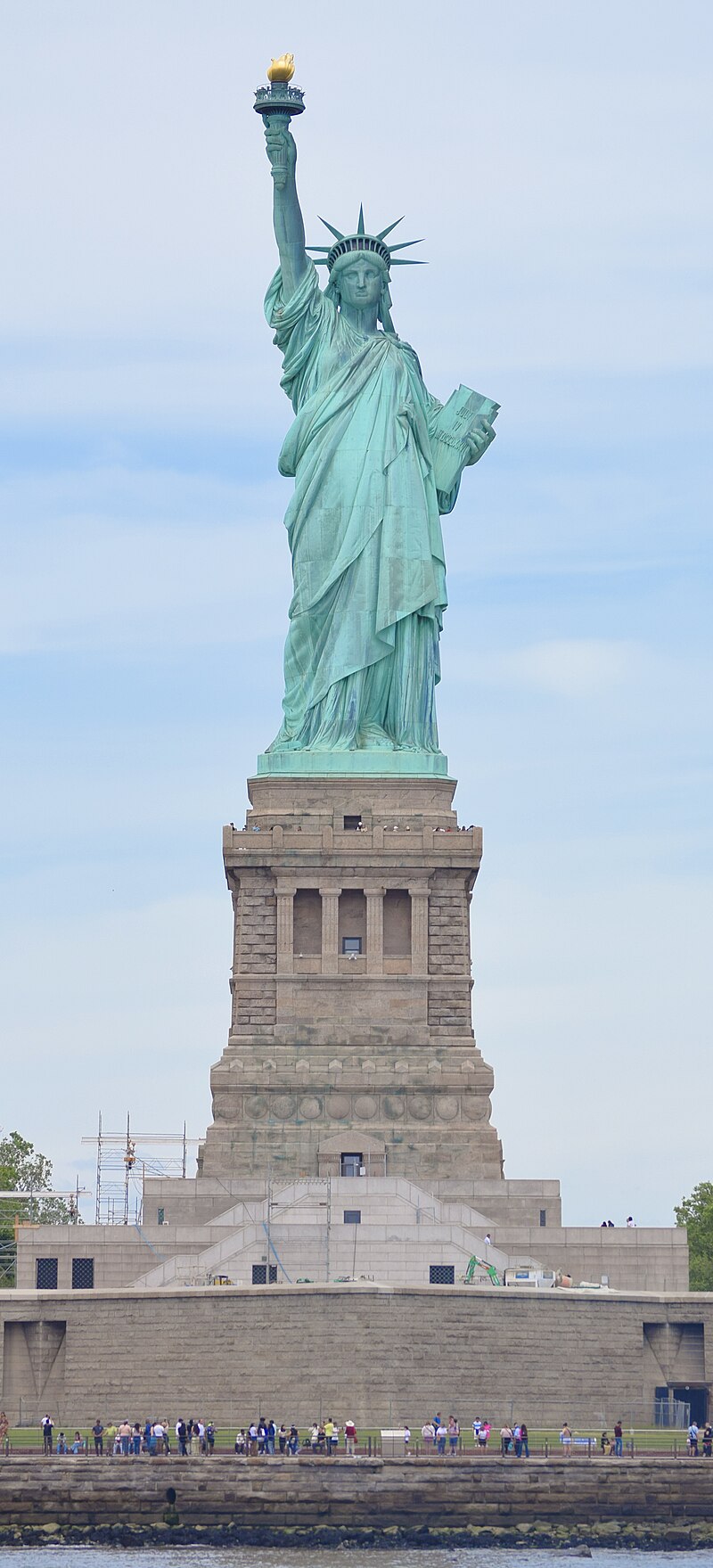
But this photo, showing her face being unpacked in 1886, seems to project a dour and rather unwelcoming attitude:
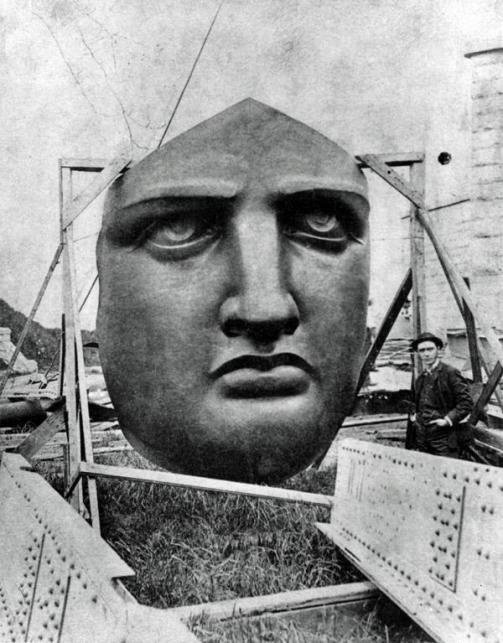
This picture, showing the statue's head on exhibit at the 1878 Paris World's Fair, make her seem a bit milder:
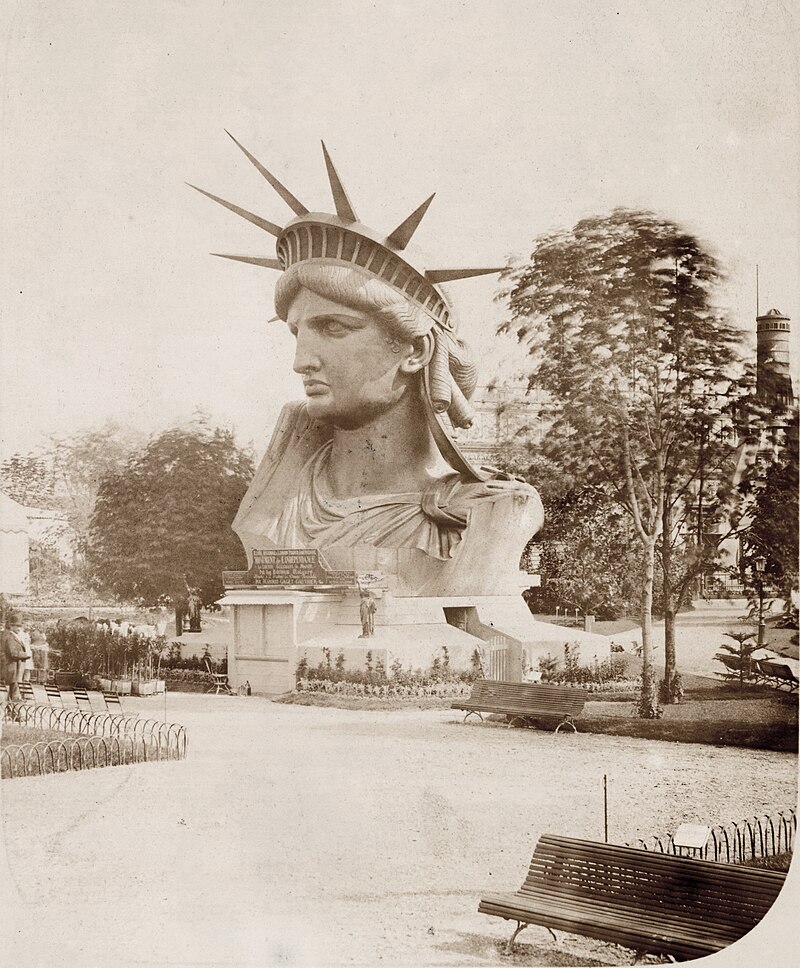
The version on this 1971 stamp looks almost friendly:
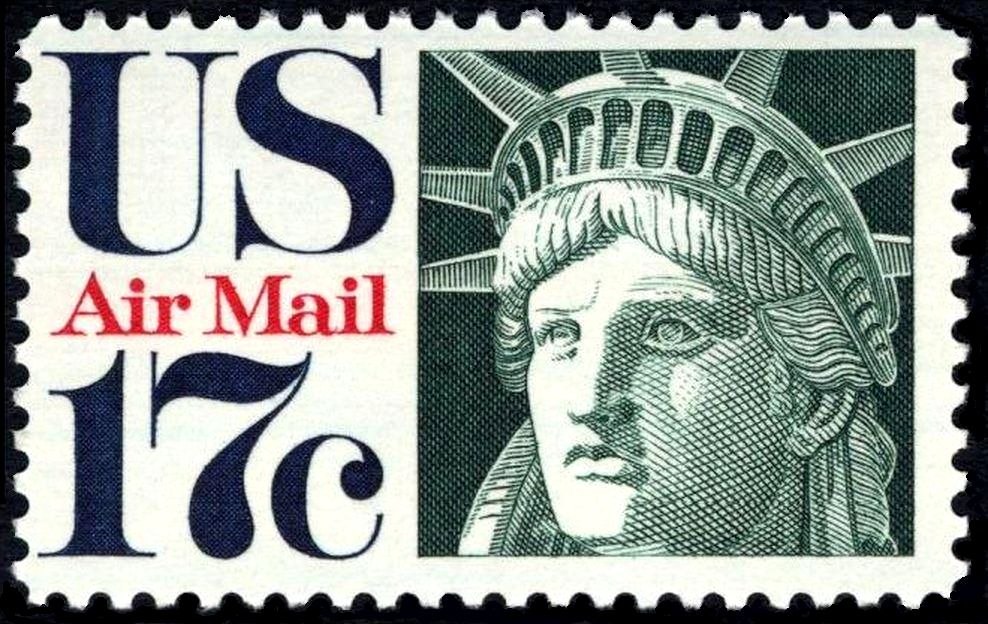
And this one, showing Nancy Reagan re-opening the statue to the public in 1986, makes Lady Liberty look blandly thoughtful, at least to me:
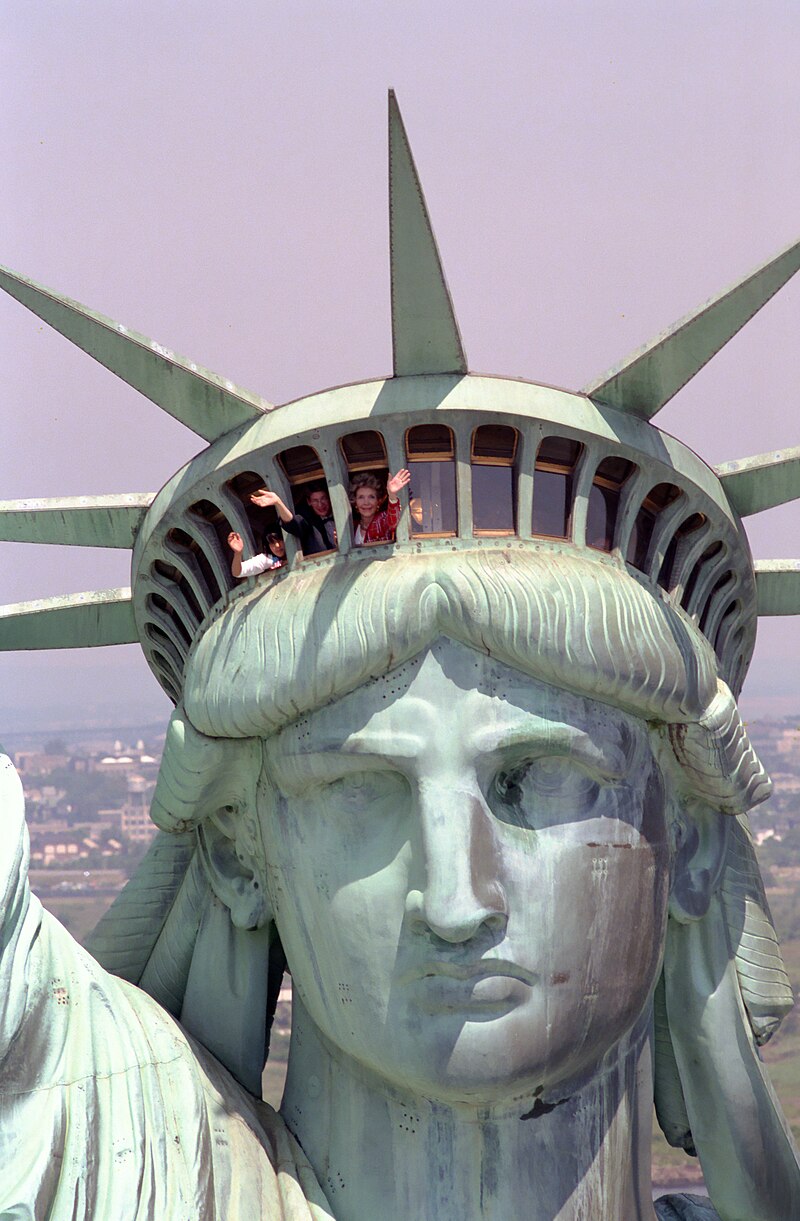
1960s-era Paul Ekman would have wanted evidence about what the Fore people in in the highlands of Papua New Guinea thought of those facial images — except that his 1960s-era methods would have excluded them,
Ekman showed photographs selected from over 3000 pictures of individuals asked to simulate emotions, from which he edited to contain "those which showed only the pure display of a single affect," using no control and subject only to Ekman's intuition. If Ekman felt a photograph did not show the correct "pure" emotion, he excluded it.
In any case, his focus in recent decades has been on deception detection.
Barbara Phillips Long said,
September 23, 2025 @ 3:41 pm
Did Paul Ekman think of taking photos of faces on Egyptian statues (Ramses II, for instance) or those of Greek and Roman statues from the ancient world? Neutral affect was pretty standard for centuries.
https://www.smithsonianmag.com/smart-news/archaeologists-unearth-long-lost-top-half-enormous-ramses-II-statue-180983937/
https://www.metmuseum.org/art/collection/search/256255
https://www.metmuseum.org/art/collection/search/248268
Victorians didn’t commonly smile for photos, either. The Smithsonian Magazine has this explanation:
Although we tend to think the subjects had to hold their faces still for an uncomfortably long time, exposures from the early days of commercial photography only lasted about 5 to 15 seconds. The real reason is that, in the mid-19th century, photography was so expensive and uncommon that people knew this photograph might be the only one they’d ever have made. Rather than flash a grin, they often opted to look thoughtful and serious, a carry-over from the more formal conventions of painted portraiture, explains Ann Shumard, senior curator of photographs at the National Portrait Gallery. When George Eastman, founder of Eastman Kodak, introduced hand-held cameras in 1888, it made photography more accessible and casual. Photos from around the turn of the 20th century include a lot more candids, and a lot more smiles.
https://www.smithsonianmag.com/smithsonian-institution/why-dont-people-smile-in-old-photographs-180972554/
While I can’t cite a source, I remember being amused by a complaint about a Land’s End catalog in the late 1980s or 1990s. A man wrote in to complain about how revolting he found all the smiling, friendly faces on the models. He seemed to feel the expressions conveyed insincerity.
And these days, with facial recognition and increased scrutiny of travelers, the U.S. State Department doesn’t want to see your teeth or any smiles:
Have a neutral facial expression with both eyes open and mouth closed.
https://travel.state.gov/content/travel/en/passports/how-apply/photos.html
Expecting a statue to have a friendly, welcoming facial expression, as in a candid photo, seems to me to be a distinctly 20th century cultural attitude. I can understand that both facial expression and posture contribute to a perceived “welcoming” message, but I think centuries of art history show that statues at entrances and in public places do not function like Walmart greeters. They’re there to signal that the location is one of importance, and arriving at the location may lead to an experience that is significant in one’s lifetime.
Terry K. said,
September 23, 2025 @ 5:23 pm
The first thought that came to my mind is it doesn't have to be one or the other.
And related to that, in searching Google, I find the idea that observing blind people shows that, yes, they do have the same facial emotional expressions as sighted, but they don't have the same ability to control them as sighted folks. Sighted folks being better at masking expressions or producing expressions on demand. Here's one article: https://health.howstuffworks.com/mental-health/human-nature/blind-people-facial-expressions-sighted.htm
Tom said,
September 23, 2025 @ 5:29 pm
The photo of the unpacking shows something other than a neutral expression. The corners of the mouth do not neutralize in that position.
It's possible, however, the face is designed to be seen from below. Michelangelo's David is designed like this–it's hand, arm and torso proportions are unnatural, but when viewed from below (the angle from which the statue was originally meant to be viewed), they appear correct.
As for the Ekman-Meade debate, I would think historical documents would be full of accounts of misunderstandings between people if facial expressions were culturally determined. The fact that expressions involve an interface between the emotion and motor centers in the brain and that these don't vary culturally also makes Meade less likely to be correct.
Barbara Phillips Long said,
September 23, 2025 @ 6:29 pm
Does the 1886 photo of the face being unpacked show “resting bitch face”? Earlier post on Hillary Clinton and rbf:
https://languagelog.ldc.upenn.edu/nll/?p=28376
Fritz Newmeyer said,
September 23, 2025 @ 7:06 pm
Very few people are depicted, either in art or photographs, with open-mouth smiles before the 20th century. No doubt there are many reasons, but I think that the most important is that people tended to have rotten teeth. The empress Josephine, for example, is said to have lost half of her teeth before she met Napoleon. George Washington, famously, had lost all of his teeth by early adulthood and had a set of false teeth made by Paul Revere. Even so, I doubt that he would have wanted to show them off by smiling.